
Buying a Piano or Keyboard: Advice for Beginners
People sometimes ask me: Can I (or my child) learn to play on a keyboard, or do I need a real piano?
You can learn to play using a keyboard. Many of my students have done so.
Still, at some point, depending on your interests, you may find yourself itching to get an acoustic. Here are some thoughts on both sides of the divide. Continue reading
"Should I be practicing exercises?"
That’s the question that Darshan, a new subscriber to Play & Sing, asked me recently. He’s a beginner who was particularly curious about the often-recommended exercises published in 1900 by Charles-Louis Hanon.
I thought my answer might be helpful to others, too, so here’s what I said. Continue reading
New Tutorial: How to Use the Sustain Pedal on the Piano or Keyboard
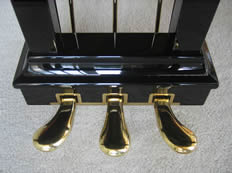
If you haven’t begun to use the pedal yet, you’re in for a thrill when you hear what a huge difference it can make in your playing. And if you are using it but without really knowing what you’re doing, I’ll show you how to get the most out of this essential tool.
I’m talking about the sustain pedal, or damper pedal. On an acoustic piano, it’s the one on the right. On a keyboard, it’s a separate device that sits on the floor and attaches to the instrument via a cable. Continue reading
Two New Piano Tutorials
Just a brief note to let you know I just put up two new lessons. “A Quick-Start Guide to the Piano: Playing Your First Piece” fits near the beginning of the Play & Sing course, and a tutorial on John Lennon’s Imagine goes at the end. You can find out more about these lessons by going to the complete course list.
Enjoy!
Dance While You Play! (Rhythm's in your body, not your head)
Today’s my first day back from vacation, and I want to share with you something that just happened.
I haven’t been playing the piano recently because I know how important it is, sometimes, to get away from my musical pursuits. And this morning, when I sat down to play, I couldn’t regain the excitement I usually feel.
And then I remembered the secret I keep forgetting and re-discovering: Continue reading
New Tutorial: Piano Technique–A Whole-Body Approach
Finally, it’s online, and I think you’ll find it helpful. The lesson is perfect for beginners, but also for more advanced students who know there’s more to piano technique than what you do with your fingers.
Here’s the video for Part 1. You can read more about it here.
Sheet music for Prelude in C now available
Some of you have asked about the sheet music for the piece I play at the start of Piano Technique: A Whole-Body Approach. Well, with just a few clicks, you can now instantly download and print out a beautifully edited and fingered score of it, and be playing it within minutes. Watch me play Prelude, and/or purchase it here.
The Top Three Myths About Learning to Play the Piano
(NEWER POSTS ARE BELOW THIS ONE)
I keep this old post up top because, as one of the commenters says, it looks at the BIG picture of how we learn to play. You’ll find practical tips here as well as exercises, resources, and the philosophy behind the DoctorKeys piano courses.
Whether you’ve been playing the piano for years or are just getting started, what you think you know may be holding you back.
Here are the common fallacies we’ll debunk:
• It all starts with learning to read music.
• It’s all about the fingers.
• Practicing means playing a piece over and over.
New Ode to Joy tutorial: Beethoven made simple but beautiful
So far, the lessons on DoctorKeys.com have focused on piano accompaniment–using chords to back up your own singing. But this lesson is different. It teaches you to play a piano solo. Continue reading
Catch me on YouTube & PianoSociety.com
My new YouTube channel has two playlists: one for tutorials, and one for videos in which I’m performing music my students and I love to play. In the second category you’ll find everything from baroque to jazz.
If you’d like to hear me playing standard (more difficult) repertoire, you can do that at PianoSociety.com, where I’ve recently become a contributing artist. Continue reading