
Three New Tutorials!
I just added some great new lessons to Pop Piano Accompaniment. Here’s a little about each:
How to Play a Song in Any Key (Transposing Made Easy)
There’s a big difference between singing a song in a key that sort of works, and singing it in the key that brings out the best in your voice. If you’re currently singing and playing any of your songs in less than the ideal range simply because you don’t know how to transpose, this lesson can help. Read more.
Empowering Your Left Hand with Open Voicings
Now that you understand the magic of open voicings, a whole new world of possibilities is within your reach.
The left hand pattern you’ll learn in this lesson is so versatile, and so satisfying, I’ve gone through periods when I’ve thought: Bruce you’ve gotta stop using this so much in your music—people will get sick of it! Read more.
Intermediate Styles and Beyond
In this lesson, you’ll learn to make your accompaniments sound fuller and richer. As you add open voicings in the left hand, and a fourth note to the three your right hand is already playing, your arrangements will sound more and more like the recordings you love to listen to. Read more.
Tired of Playing the Same Old Song in the Same Old Way?
Then play it differently! And one of the simplest, most effective, ways to do that is to change the voice leading.
Here’s what I mean. Continue reading
How to Play Adele's Someone Like You and Other 4-Chord Songs
Here’s your chance to master one of the most beautiful progressions in all of music. In the key of C, that would be the C, G, A minor, and F chords, in that order.
The songs you’ll learn to play (at least in part) include Someone Like You, No One, She Will Be Loved, You’re Beautiful, With or Without You, Continue reading
Pop Piano Accompaniment Goes Live
Just a quick note to let you know that the first four lessons of my newest course are now online. They pick up from where Play & Sing leaves off.
Read more about the new course here.
"Should I be practicing exercises?"
That’s the question that Darshan, a new subscriber to Play & Sing, asked me recently. He’s a beginner who was particularly curious about the often-recommended exercises published in 1900 by Charles-Louis Hanon.
I thought my answer might be helpful to others, too, so here’s what I said. Continue reading
New Tutorial: How to Use the Sustain Pedal on the Piano or Keyboard
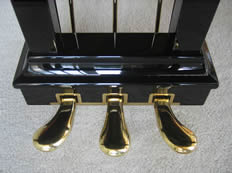
If you haven’t begun to use the pedal yet, you’re in for a thrill when you hear what a huge difference it can make in your playing. And if you are using it but without really knowing what you’re doing, I’ll show you how to get the most out of this essential tool.
I’m talking about the sustain pedal, or damper pedal. On an acoustic piano, it’s the one on the right. On a keyboard, it’s a separate device that sits on the floor and attaches to the instrument via a cable. Continue reading
Two New Piano Tutorials
Just a brief note to let you know I just put up two new lessons. “A Quick-Start Guide to the Piano: Playing Your First Piece” fits near the beginning of the Play & Sing course, and a tutorial on John Lennon’s Imagine goes at the end. You can find out more about these lessons by going to the complete course list.
Enjoy!
Dance While You Play! (Rhythm's in your body, not your head)
Today’s my first day back from vacation, and I want to share with you something that just happened.
I haven’t been playing the piano recently because I know how important it is, sometimes, to get away from my musical pursuits. And this morning, when I sat down to play, I couldn’t regain the excitement I usually feel.
And then I remembered the secret I keep forgetting and re-discovering: Continue reading
New Tutorial: Piano Technique–A Whole-Body Approach
Finally, it’s online, and I think you’ll find it helpful. The lesson is perfect for beginners, but also for more advanced students who know there’s more to piano technique than what you do with your fingers.
Here’s the video for Part 1. You can read more about it here.
The Top Three Myths About Learning to Play the Piano
(NEWER POSTS ARE BELOW THIS ONE)
I keep this old post up top because, as one of the commenters says, it looks at the BIG picture of how we learn to play. You’ll find practical tips here as well as exercises, resources, and the philosophy behind the DoctorKeys piano courses.
Whether you’ve been playing the piano for years or are just getting started, what you think you know may be holding you back.
Here are the common fallacies we’ll debunk:
• It all starts with learning to read music.
• It’s all about the fingers.
• Practicing means playing a piece over and over.